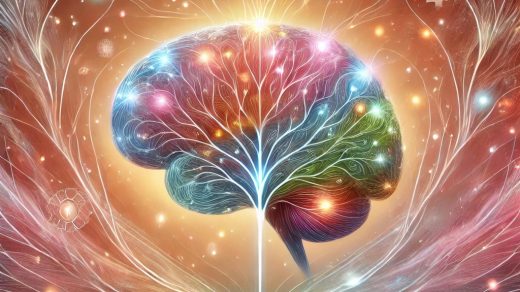
Creativity is often seen as a mysterious gift — and for some people, it is. Certain individuals seem to be born with a creative spark, effortlessly generating ideas, stories, or art. However, this does not mean that those who weren’t born “naturally creative” are out of luck. Neuroscience shows that creativity is largely a learnable skill, rooted in the way the brain forms connections and processes information. With the right habits, mindset, and environment, anyone can cultivate their creative potential.
1. Encourage Communication Between Brain Networks
Creativity relies on interactions between multiple networks in the brain:
- The left hemisphere focuses on logic, analysis, and language.
- The right hemisphere handles intuition, imagination, and holistic thinking.
When these networks work together, the brain can form novel connections and generate innovative ideas.
Practical tip: Alternate between analytical tasks and imaginative activities. Solve a problem, then draw or brainstorm freely. Walking, meditating, or showering can also encourage these networks to interact during periods of relaxation.
Reference: Andreasen, The Creative Brain – explores how connectivity between different networks supports creative thought.
2. Cross-Pollinate Ideas
Creative breakthroughs often occur when the brain combines ideas from diverse domains. Reading widely, exploring new fields, and experiencing different cultures or practices gives your brain more “raw material” to form original connections.
Practical tip: Keep a notebook of interesting concepts, observations, or quotes from various sources. Later, combine them to generate new insights or solutions.
Reference: Kaufman & Gregoire, Wired to Create – highlights that highly creative individuals seek novelty across domains and deliberately expose themselves to diverse stimuli.
3. Leverage the Default Mode Network (DMN)
The DMN is your brain’s resting-state network, active when you’re not focused on a specific task. It is crucial for idea incubation, connecting distant concepts, and generating insights.
Practical tip: Allow yourself periods of reflection, daydreaming, or quiet thought. Even mundane activities like walking or doing household chores can trigger connections between ideas.
Reference: Andreasen, The Creative Brain – discusses how the DMN facilitates the unconscious linking of ideas, which is essential for creativity.
4. Use Constraints to Boost Creativity
Creativity often thrives under limits. Constraints force the brain to think differently and explore novel solutions. Without boundaries, too much freedom can lead to indecision and wasted energy.
Practical tip: Challenge yourself with self-imposed limitations:
- Write a story in exactly 150 words.
- Create a painting with only three colors.
- Solve a problem using only the resources you have on hand.
References:
- Andreasen, The Creative Brain – shows that cognitive challenges encourage network connectivity.
- Kaufman & Gregoire, Wired to Create – emphasize that highly creative individuals often embrace constraints to stimulate innovation.
- Lehrer, Imagine – provides examples of creative teams thriving under technical or budgetary limits.
5. Harness Emotional Sensitivity
Creative individuals are often highly sensitive and emotionally aware. Emotions provide essential input and inspiration for original ideas.
Practical tip: Reflect on your emotions, journal them, or translate them into creative work. Emotional awareness allows your brain to make meaningful connections between personal experience and innovative thought.
Reference: Kaufman & Gregoire, Wired to Create – highlight the correlation between emotional sensitivity and creative output.
6. Practice and Persistence
Even the most creative brains need structured practice. Skill development, repeated experimentation, and consistent effort strengthen the neural pathways that support creativity.
Practical tip: Treat creativity like a skill. Dedicate time every day to practice, experiment, and refine ideas. Even “failed” attempts are building blocks for future breakthroughs.
References:
- Andreasen, The Creative Brain – emphasizes that creative mastery emerges from deliberate effort over time.
- Lehrer, Imagine – shows how persistent experimentation leads to the combination of ideas and innovative solutions.
Conclusion
Creativity is not a mystical gift — it is a neurocognitive skill that can be nurtured. By encouraging brain network communication, cross-pollinating ideas, leveraging the DMN, embracing constraints, harnessing emotions, and practicing consistently, anyone can enhance their creative potential and produce original, meaningful work.